
03 · Water & feed
Centre-Pivot Irrigation and Lucerne: A Water-Efficiency Checklist for South African Farms
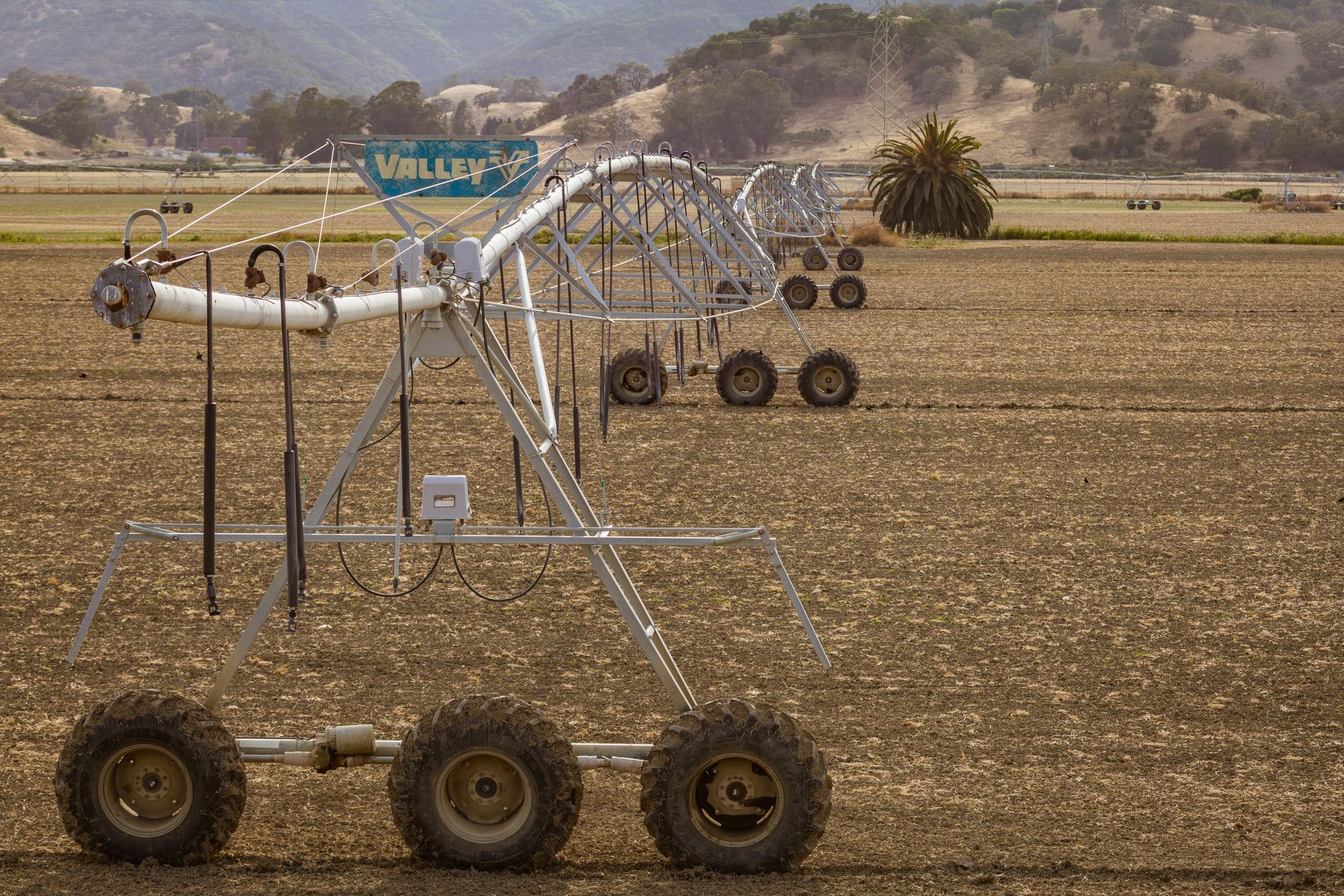
A centre pivot is not automatically efficient because it is mechanised. Efficiency comes from the condition of the system, the accuracy of its application and the quality of the decisions that determine when and how much water is applied.
Know the legal and operational water context
South Africa is water scarce, and the Department of Water and Sanitation identifies agricultural water conservation and demand management as a national priority. Every irrigation plan should begin with confirmed water-use authorisation, allocation, abstraction limits and the conditions attached to the relevant source or scheme.
Operationally, translate the authorised volume into a seasonal water budget. Compare that budget with expected crop demand, system losses and likely supply interruptions. A budget makes trade-offs visible before peak demand arrives.
Measure what the pivot actually applies
Pressure at the pump does not prove uniform application at the crop. Worn nozzles, incorrect sprinkler packages, leaks, blocked emitters, wheel-track problems and pressure variation can create over- and under-watered zones. A catch-can or equivalent distribution test provides evidence of application depth and uniformity.
Record run time, speed setting, estimated depth and any repairs. Metered abstraction and energy use provide additional checks. When water and electricity records change without a corresponding change in crop area or schedule, investigate rather than normalising the difference.
Schedule from the root zone, not the calendar
Fixed-day irrigation ignores rainfall, temperature, wind, soil texture, rooting depth and the stage of the lucerne stand. Use soil-moisture observations or sensors, local weather information and crop condition to estimate when the root zone needs replenishment.
The objective is to avoid both crop stress and unnecessary deep drainage. Smaller, frequent applications are not always better if they encourage shallow rooting or increase evaporation. Application depth should suit the soil’s infiltration and storage capacity.
Connect water management to forage quality
Lucerne is valuable because it can provide protein-rich forage, but quality depends on harvest timing, plant condition, drying and storage as well as irrigation. Water applied too late cannot reverse maturity, while poorly timed irrigation can complicate cutting and curing.
Plan irrigation and harvest as one sequence. Keep the field surface trafficable, allow a suitable curing window and protect hay from moisture and contamination. Feed quality should be confirmed through representative analysis when formulating animal diets.
Use a monthly efficiency review
A practical dashboard can be simple: authorised volume, metered use, hectares irrigated, application tests, energy per operating hour, yield, forage analysis and maintenance incidents. The purpose is not to chase a single ratio but to reveal where water, energy and crop performance are drifting apart.
- Inspect leaks, pressure and sprinkler condition before peak season.
- Confirm application depth with field measurements.
- Update the water budget after significant rainfall or supply changes.
- Coordinate irrigation with cutting, curing and storage plans.
- Review yield and feed quality against water and energy used.
Evidence